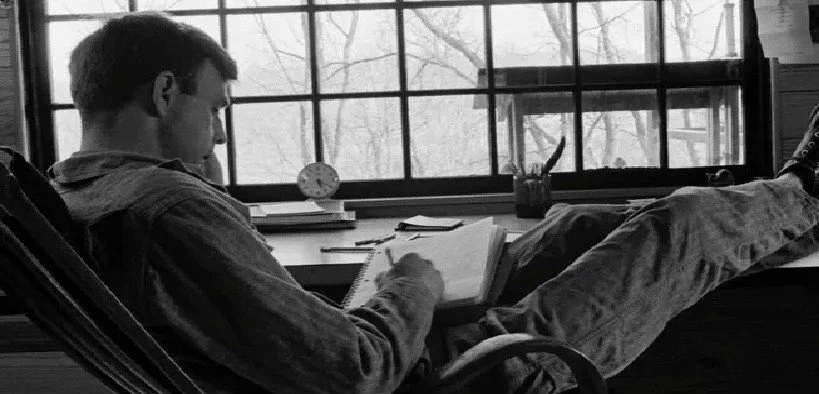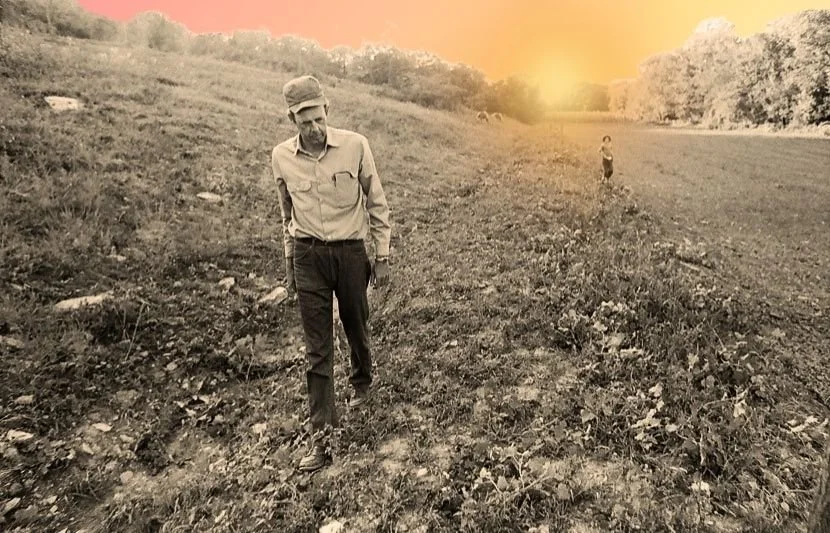
Wendell Berry, an icon of American literature—particularly agrarian fiction, non-fiction, and poetry—passed away August 31st, 2026. He was 92 years old. Over the course of nearly a century, he imparted upon the world a vast body of literary work, and without a doubt had a great impact on arts and culture, agriculture, and America’s wild places.
The virtues to celebrate in Berry’s work are innumerable, and the value I personally find in his writing are wide ranging. Not only is it the familiarity I feel in the lives of his rural fictional characters, or the poetry that walks among hay fields and wild woods, streambanks and rivers, and not only is it the essays he wrote, extolling the virtues of landscapes that are not bifurcated, landscapes where wild things and the food we eat not only live in harmony, but live and die as one, nourishing one another in intricately braided systems.
Those facets of Berry’s work have informed both my writing and my understanding of the world, and I’m a better person for having read so many of his short stories, poems, and essays (with so many more still to read). But if I had to choose one thing, one effect his work had on me as a writer, and as an individual, it would be this: Through his creative work he taught me, assured me, that it was okay to stay in one place, one region, to not feel the insatiable desire to travel the world that everyone around me seems to be feeling, and that my love, pull, and commitment to my home region—the Inland Pacific Northwest—was not a shrinking away from the world, but something human. Something of substance.
There is a narrative in our culture—and I do suspect this is something particularly prevalent not only in American literature, but American culture writ large—that great writers must travel the world in order to have something worth writing about, and more importantly, to be able to write something worth reading. There are exceptions, of course, but I have found it to be a persistent, and, at times, overwhelming refrain. I suspect this may have something to do with our genetics, our ancestors, given the vast majority of us in the United States, at some point or another, had ancestors that crossed oceans on months-long voyages in search of opportunity and freedom (with obvious exceptions, such as the hundreds of thousands of enslaved peoples who had no choice in the matter, and the millions of Indigenous peoples who were systematically killed and displaced by European and American expansion). Ancestors who migrated from the eastern seaboard to the Midwest. From the Midwest to the West. From the West back to the East; so it goes.
(Before I go on, I should say, I’m not lamenting the impulse to travel the world, or to live far and wide. The personal and cultural benefits of travel, of experiencing as much of the world as we can in our short time on Earth, are widely documented—and, I suspect, mostly true.)
As it concerns writing, there are many examples of the elevation of this idea in American literature, and perhaps the man who embodied the aesthetic of the globe-trotting, swashbuckling, adventure-seeking writer more than any other is, of course, Ernest Hemingway. Hemingway fought in multiple wars, ran with the bulls in Spain, fished the coasts of Cuba during World War II and the rising tensions of the Cold War. He lived and wrote on warm beaches in Key West, kicked cans and eventually died in the snowcapped mountains of Sun Valley. There is no doubt that these experiences gave Hemingway all the material he needed to become one of the greatest writers in history.
This was the model for literary success and relevancy that I was most heavily exposed to early on. However, it was a lifestyle, a mindset, that I never felt comfortable in. It stood at odds not only with my early experiences, my social class and status, but also—and more importantly—it stood in contrast with what I was interested in, both as a writer and as a reader.
For someone who grew up on the cusp of the lower end of working class and the upper reaches of the poverty line, buying expensive plane tickets and traveling great distances was not a feature of my formative years. But, given my fortune of having great parents, parents with a love of the outdoors, a love of the places they came from, we did travel regionally. We traveled in Washington, Idaho, Montana, and Oregon—the only states I’d been to up until the age of sixteen.
We went outside, we fished and shot BB guns, we climbed on alfalfa bales that were taller than my sister and I. We played hide and seek in corn fields, we swam in the Columbia and the Clark Fork, caught crawdads in the Palouse River. As a child I remember contemplating the undulating skylines of these landscapes, traveling to the same places, returning to them each year, seeing how a row of elms fills out from one summer to the next, how the same stand of rabbitbrush goes into bloom about a week before the one right next to it, year after year, operating on some internal clock that I don’t really understand, but I see it happening, I smell the perfume, I hear the buzzing of the honeybees that flock to the golden fronds. I notice how the banks of a river shift over the course of a year, over the course of ten years. How a swinging bridge, one that crosses the St. Joe River, just upstream from the town of Avery, Idaho, has aged over the years. How it’s planks creak in a way they didn’t used to. How my knee clicks in a way it didn’t back when I was a child, bending low to peer between the bridge’s slats to the clear Swiftwater below.
Through this aperture, a narrow one compared to many, I developed a close relationship with my home region of the Inland Pacific Northwest. A familiar relationship, a relationship where my innate human desire for novelty was quenched through noticing, through paying attention, through understanding how the same place changes from one year to the next, rather than moving from one location to another, and another, never to return and see that same bend in the river in the fall instead of the spring, or to see how the character of a landscape changes with the encroachment of human development. To notice how the elk and the meadowlark and the salmon become rarities—either moving away or slowly disappearing—as the raccoon and the raven and the pikeminnow multiply.
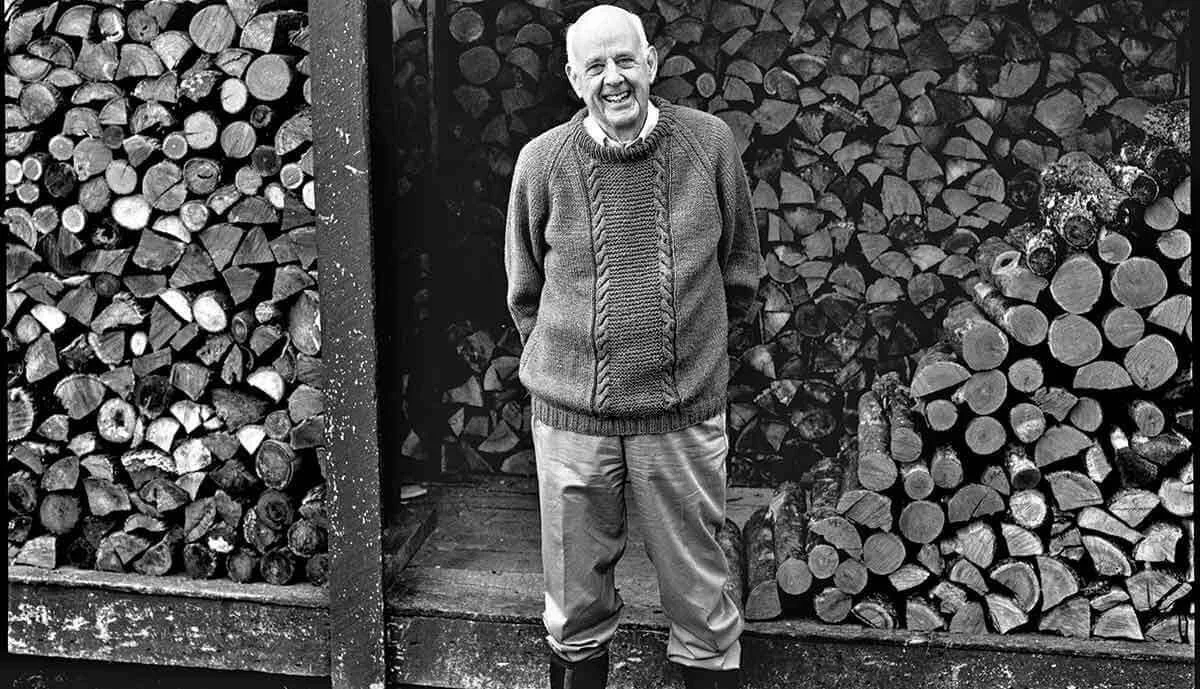
Wendell Berry, among others, taught me that the world needs writers, artists, thinkers, who do stay in the same general region their entire lives. He taught me that deep familiarity, deep love for an ecology, is something that can be expressed through one’s creative work, and that this work can travel beyond the hyper locality of its origin, and invoke in the reader a universally shared experience that crosses the very borders that Hemingway traversed, finding purchase in the hearts and minds of those in some distant land.
It’s a perspective that, counterintuitively, may not be as narrow as it seems. The work of a Kentuckian farmer like Berry, born of his very specific geographic and experiential lens, contains universal truths that can be related to by one who lives in Chile, in Ireland, in Iraq or Vietnam. It is personal and human and necessary; maybe now more than ever, in a world that seems to be doing it’s best to divide us, to strip us of the very things that make us human.
Berry taught me that what is important is not necessarily one’s lifestyle—whether it be that of a globetrotter or a home-towner—but it is how they experience it, the quality of experience, and what one does with that experience, that matters. To utilize one’s innate inclinations to contribute something of value to the world, to the culture, to our family and friends and strangers, and to the birds and our dogs and the soil beneath our feet. To sublimate our experience into something of substance, something of substance that will nourish our collective experience as human beings.
That’s all a long-winded way of saying this: Thank you, Mr. Berry, for all of your words, your commas, your perfectly placed pauses. May your work be read for generations to come.
Traveling at Home
By Wendell Berry
Even in a country that you know by heart
it’s hard to go the same way twice.
The life of the going changes.
The chances change and make a new way.
Any tree or stone or bird
can be the bud of a new direction. The
natural correction is to make intent
of accident. To get back before dark
is the art of going.